Monday, May 14, 2012
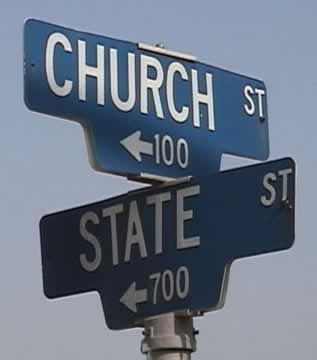
Separation of Church...and Estate
Monday, April 30, 2012
Estate Planning For Women (And the Men Who Love Them)
Question #7
A fellow attorney (and award-winning journalist) Deborah Jacobs authored the book, “Estate Planning Smarts: A Practical, User-Friendly, Action-Oriented Guide”. In her Forbes article titled “Estate Planning for Women (And the Men who Love Them)” she indicated the below question is a question every financially savvy woman should be able to answer.
Should you give away assets now to save taxes?
Now that the estate tax exclusion has gone to $5 million per person ($10 million per couple), this issue concerns fewer people. Keep in mind, too, that most methods of saving estate taxes require you to totally give up ownership and control over assets, whether you are giving them to people directly or putting them in a trust. A threshold question for anyone contemplating this strategy: Can I afford it? Be sure you are leaving yourself enough, and to be on the safe side, you should assume you will live to an advanced age.
You can give anyone $13,000 a year (a couple can give $26,000) without eating into your $5 million exclusion. If you want to give away more than that, you can either count your gift against the $5 million exclusion amount or, if you have used up the tax-free amount, pay gift tax of 35%. Remember that each dollar of the exclusion used during life shaves a dollar off what is available for your estate to use after your death.
So before you dip into the lifetime exemption, consider some simple, tax-free ways to prune your estate. They include paying tuition and medical expenses for another person (such as a grandchild) directly, funding 529 college savings accounts and converting a traditional IRA to a Roth.
This concludes the "Estate Planning for Women (and the Men Who Love Them) series. I hope you have found these posts thought provoking and valuable. Questions like these can often trigger even more questions in your mind. Please accept my invitation to schedule a meeting where we can discuss these topics and others that might be relevant to your estate planning. Give my office a call to set a meeting.
Tuesday, April 17, 2012
6 Things To Do Before Your Spouse Dies
While important to both sexes, estate planning often affects women more profoundly. Women live longer on average and tend to marry older spouses, making them three times as likely as men to be widowed at 65. It’s a staggering reality, and here is some pertinent information for coping with this reality.
Barbara Stanny recently contributed this article to Forbes. The article gets right to the point in a practical and personal way.
It's time to have "The Talk"
I heard from a woman whose husband had just been diagnosed with terminal cancer. She wanted to know what she should do before he dies.
Reading her words, I felt a mixture of heartbreak and admiration. Death is not easy to talk about, let alone prepare for. Sadly, most women will face a similar dilemma at some point. Instead of going into denial, like many do, this woman went into action.
Her question sent me back to when my father became seriously ill. I’ll never forget the day I went to my mother and asked: “Do you know what Dad has planned for you when he dies?”
“Oh yes,” she replied quickly, but when I pressed her for details, she couldn’t deliver any.
She also made it abundantly clear: this was not a conversation she wanted to have. I made it even clearer: avoidance was not an option. Here’s what we did:
1. We had “The Talk.” I made my Mom sit down with my Dad and we looked at all the financial documents: bank statements, investments, estate planning, etc. This was not, by any means, an easy conversation. Dealing with death is emotionally excruciating, at least it was for us. Nerves were frayed. My Mom glazed over. My Dad lost patience. I kept scratching my wrist (a nervous habit) until it bled. But by the end, my Mom knew where every penny was and what arrangements he had ( and hadn’t) made made.
2. We assembled “ The Team.” My Dad was very much a do-it-yourselfer. Mom needed her own team of professionals to support and guide her (during and after). First on our list was to hire an estate lawyer. Mom, my sisters and I met with him first, brought in my father, and together my parents created a very good, tax efficient estate plan… which my Mom not only understood, but had a big role in creating. The whole family helped her find an investment advisor (we interviewed 3). She also hired a CPA . It soon became clear he wasn’t a good fit, so she recently hired someone else. She meets with her “team” on a regular basis to this day.
3. We updated documents. We made sure the Will, Power of Attorney, EVERYTHING reflected their latest info and current wishes.
4. We envisioned a future without Dad. My mom started thinking about living single: how much money she’d need to live on (a lot… she wasn’t going to work nor did she have to, but she did like to spend); how she wanted her money invested (very conservatively);and who would assist her with this (her team).
5. We had regular family meetings. These meetings, though often emotional, were absolutely wonderful in getting everyone on the same page while Dad was still alive. Meetings included my sisters, spouses, and all the grandchildren (we eventually had great grandkids crawling around too). My Dad let everyone know what his wishes were, especially for philanthropy, and enrolled the whole family to the board of his foundation. These meetings drew us closer in many ways.
6. Mom talked to friends. She’d had several friends who lost their husbands, so she talked to them at length. They gave her great advice which really helped her see life goes on, happily so.
Having done these things, by the time my father died, all my mother had to do was grieve. Every detail was in order. There were no surprises. All papers signed. All major decisions made. Her team was in place. Practically speaking, his passing was seamless. Emotionally, it wasn’t easy. But being prepared, financially, made it a little easier.
If you would like to insure the stability in your financial life, please give me a call. I work every day helping my clients “Be Prepared”. I welcome your questions. Let’s start early when the stress level is the lowest to work our way through this check list of 6 things to do before your spouse dies. You are always invited to contact me by phone or leave a comment on this blog
Friday, March 23, 2012
Estate Planning For Women (And the Men Who Love Them)
Question #6
A fellow attorney (and award-winning journalist) Deborah Jacobs authored the book, “Estate Planning Smarts: A Practical, User-Friendly, Action-Oriented Guide”. In her recent Forbes article titled “Estate Planning for Women (And the Men who Love Them)” she indicated the below question is a question every financially savvy woman should be able to answer.
What's a tax dowry?
Starting in 2011, the tax-free amounts you can give to no-spousal heirs during life and at death are combined into a single $5 million exclusion. So, for example, if you have used $1 million of the exclusion to make lifetime gifts, the unused exclusion when you die will be $4 million, rather than $5 million.
Married couples get a new, special break: They can share each partner's $5 million exclusion during life (this process is called gift-splitting) and give more to the kids now, tax-free. But of course this also reduces how much of the tax-free amount will be available when they die, either for their own use or to be carried over by the survivor.
This can pose some tricky issues when at least one member of a couple is wealthier than the other and has been married before. Soon after the new tax law passed, I heard about a situation in which the poorer spouse (a woman) with an unneeded $5 million exclusion agreed to combine the two exclusion amounts for lifetime gifts so that her husband could give more to his kids from a previous marriage, tax-free. Warning: Don't give up your tax dowry without legal advice, and make sure it comes from your own lawyer--not one your spouse hired.
Questions like this one can often trigger even more questions in your mind. Please accept my invitation to schedule a meeting where we can discuss this topic and others that might be relevant to your estate planning. Give my office a call to set a meeting.
Tuesday, February 28, 2012
The Odds are worse for finding a Nursing Home for Dad
Liz Sundvick is a member of WealthCounsel who practices law in the state of Nevada. I found her commentary about gender differences in nursing home availability to be valuable. Her comments are based on the article article “Fewer Beds For Men Entering Nursing Homes” The New York Times The New Old Age Blog (January 30, 2011)
Finding a nursing home for an ailing loved one, and a good nursing home that is affordable, is already a fairly difficult task. Unfortunately, it’s only likely to grow in difficulty as the number of elderly in need of care begins to peak. Unfortunately, too, there are some factors that you just might not think of. Like this: it is disproportionately difficult to find a nursing home for a male patient.
This fact was recently pointed out over at the New Old Age Blog and I thought it was worth sharing. What is working against our male elderly loved ones is not much more than simple math, with a bit of Medicare policy work at play. As you are likely aware, women have a longer life span on average and therefore there are more women in nursing homes to begin with; that’s already a bottleneck based on population statistics. Then you throw in the fact that, under Medicare rules, most rooms in nursing homes are no more than “semi-private”, a delicate euphemism, and co-ed rooms aren’t allowed either. Thus, with more women already in such rooms the more that only women can be admitted into a facility. The math is fairly easy to figure out, but it’s a strange and unintended consequence nonetheless.
Topics like this one can often trigger even more questions in your mind. Please give me a call to schedule a meeting, then we can discuss this topic and others that might be relevant to your estate planning.
Tuesday, February 7, 2012
Estate Planning For Women (And the Men Who Love Them)
Question #5
A fellow attorney (and award-winning journalist) Deborah Jacobs authored the book, “Estate Planning Smarts: A Practical, User-Friendly, Action-Oriented Guide”. In her Forbes article titled “Estate Planning for Women (And the Men who Love Them)” she indicated the below question is a question every financially savvy woman should be able to answer.
What's the difference between a will and a living trust?
There is widespread confusion about the differences between these two documents, and when you need one rather than the other. A common misconception is that living (revocable) trusts avoid estate taxes, which is not true. Both a will and a living trust can be used to transfer assets, but each has unique uses. For example, a living trust can hold assets for your benefit while you are alive--say, in case you are suffering from dementia. Only a will can be used to appoint a guardian for a child.
In some states, living trusts are also used to avoid or limit the cost of probate--the process through which a court determines that a will is legally valid and approves the distribution of assets covered by that will. Whether probate is costly or burdensome will depend on the state. Still, there are times when you might want to use a revocable trust to limit how much of your estate goes through probate or to avoid it altogether. For example, if you are concerned about publicity over your net worth or the identity of your beneficiaries, you might transfer assets through a trust--which, unlike a will, is not a public document. Someone leaving assets to a domestic partner might use a revocable trust, because it is harder for family members to challenge a trust than a will.
A living trust is also useful if you own real estate in a state that is not your primary residence. Real estate is governed by the probate rules of the state in which it is situated. Unless the property is in a living trust, an Illinois resident who has a home in Florida, for instance, would need to probate the property separately there.
Questions like this one can often trigger even more questions in your mind. Please accept my invitation to schedule a meeting where we can discuss this topic and others that might be relevant to your estate planning. Give my office a call to set a meeting.
Tuesday, January 24, 2012
Five Documents Most Need
I’m sharing this post by my WealthCounsel colleague, Scott Makuakane, who practices in the state of Hawaii. People’s situations vary, and I am not suggesting that you need all five of these documents. But almost everyone needs to put plans and documents in place to achieve the goals covered in this post.
"Estate planning" is far more than a set of documents. It includes the plan behind the documents and the goals that the documents are intended to advance. That being said, there are certain documents that just about everybody should have in place. Not having these documents will virtually guarantee that your wishes will not be carried out if you are incapacitated or if you die.
- Your Will. If you don't have a will, the law of the State (or States) where your assets are located and/or where you reside will dictate where your assets go after you are gone, as well as who will be in charge of making sure your bills are paid and your assets are properly distributed. This process will almost always involve the courts. Having a Will does not avoid sending your family to the courthouse, but at least it gives them a set of instructions to follow. If your instructions are clear, the court will help your family carry them out.
- Your Revocable Trust. The single most effective way to bypass the courts is to create and fund (transfer your assets into) a revocable trust. This can avoid a court proceeding if you are incapacitated, and it can avoid your family's having to go to court to settle your estate after you die. If you have a revocable trust, you will still need a special kind of Will, called a "Pourover Will," to serve as a safety net to funnel assets into your trust if you don't put all of them there during your lifetime.
- Durable Power of Attorney. A durable power of attorney can serve a similar function to your Pourover Will. That is, as a safety net to enable your hand-picked helper to put assets into your revocable trust if you are unable to do so yourself. A durable power of attorney can also help your loved ones make sure your estate plan works as it was intended to work.
- Your Advance Health-Care Directive. This document enables you to say who will make health-care decisions for you if you are unable to communicate them yourself. It also enables you to make the ultimate decision about your medical care--when to stop trying to keep you alive by artificial means.
- Your HIPAA Authorization. HIPAA is a federal law that has far-reaching implications. One of them is that if your medical providers do not zealously protect the privacy of your medical information, they can be subjected to substantial penalties. Thus, if you want your doctor to be able to discuss your medical condition with your family and your hand-picked decision-makers, you have to specifically authorize the release of your medical information to your specified recipients. Not even your spouse or your adult child can get information about you from your doctor without your permission, which could be a real problem if those are the people you are relying on to make medical decisions for you.
Since many of these documents would be referred to in life-changing, life-threatening, or life-ending events; you want to have these documents thought through and executed to avoid confusion and decision paralysis during one of these events. I am available to meet to counsel you on these or other documents that keep you confident if facing any of these type of events.


